


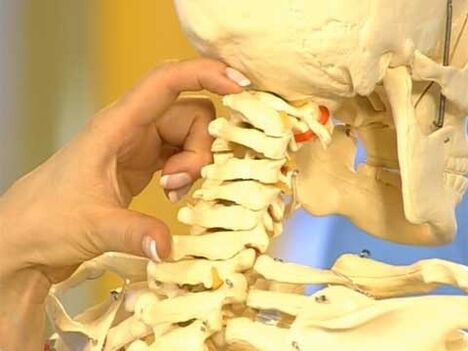
Cervical osteochondrosis (spondylosis, spondyloarthrosis) is a progressive disease caused by degenerative changes in intervertebral discs, cartilage tissue, ligaments and bone processes themselves.
Headache, dizziness, darkening of the eyes - all this can be the cause of cervical osteochondrosis, which often occurs in very young people.
The cervical spine consists of seven vertebrae, ligaments, intervertebral discs, joints and is the most mobile, i.e.movable part of it.
Intervertebral discs are located between two vertebrae and act as shock absorbers.That is, they prevent the surfaces of the vertebrae from touching and evenly distribute the load on the cartilage tissue during flexion, extension and rotation of the head.
In addition to the discs, the vertebrae are connected by joints and ligaments;the absence of pathological changes in these organs ensures normal mobility of the vertebrae and therefore of the entire neck.
Causes of osteochondrosis of the neck
The main cause of spondylosis of the neck is a violation of nutrition and metabolic processes in the intervertebral discs and ligaments.In its structure and function, the disc resembles a sponge, which must constantly be compressed to remove unnecessary substances and loosened for nutrition.
To ensure the permanence of this process, the spine must be mobile during the day;the absence of this condition leads to a change in the properties of the disc tissue, as a result of which it decreases in volume and no longer provides sufficient shock absorption.

The vertebrae begin to come into contact with each other, their bone tissue grows and the lumen through which the spine, arteries and nerve endings pass narrows.The narrowing of the lumen provokes compression of the nerve endings and all the symptoms of chondrosis appear.
Therefore, the main provoking factors for the appearance of osteochondrosis of the cervical spine at the moment are:
- sedentary lifestyle;
- genetic predisposition;
- overweight, monotonous diet;
- intoxication, infection;
- age-related changes;
- overload of the spine;
- prolonged uncomfortable position of the body;
- poor posture, flat feet;
- hypothermia, adverse environment;
- injuries.
The disease osteochondrosis of the cervical spine is also an occupational disease.The prolonged awkward posture of drivers and computer operators leads to stagnation of the vertebrae and their inflammation.Osteochondrosis can occur due to hormonal and vascular disorders.
Symptoms of cervical osteochondrosis
Cervical osteochondrosis, depending on the involvement of arteries or nerves in the pathological process, can be divided according to clinical signs.

Compression of the vertebral artery causes the following changes in well-being:
- migraine The pain increases gradually, often starts from the back of the head, is localized in one half of the head and can radiate to the eye or ear.The patient complains of vertigo, tinnitus and possibly nausea and vomiting.Cervical migraine is poorly controlled by conventional analgesics.
- Fainting at the peak of a headache or on sudden turning of the neck.
- Swallowing disorder.
- Pressure jumps from low to high numbers and vice versa.The attack is accompanied by a feeling of fear and panic.
Compression of the nerve endings of the spinal cord is called radicular syndrome;characterized by symptoms:
- Pain in the vertebrae of the neck, constant, painful.It worsens over time and causes migraines;
- Pain in the back of the head and numbness in the upper part of the neck;
- Sensation of enlargement of the tongue, difficulty eating, feeling of a lump in the throat;
- Dull pain in the clavicle, in the region of the heart;
- Limitation of movement in the arms - it is impossible to lift or move to the side.
- Sharp pain in the neck, spreading to the shoulder blade, arm and fingers;
- Numbness of the hands, goosebumps, weakness when squeezing.
Pain in osteochondrosis of the cervical spine is initially noticed as dull, then increases and spreads throughout the body.Pain in the hands can be observed simultaneously on the left and right, accompanied by numbness of the fingers.With cervical osteochondrosis, due to impaired blood supply, blurred vision, reduced hearing and night snoring may occur, the appearance of which provokes tension in the neck muscles.
Treatment of cervical osteochondrosis
Treatment of osteochondrosis of the cervical vertebrae is complex, including pain relief and restoration of normal functioning of the vertebrae.In general, the disease is treated by a neurologist;in the first stage, drugs are prescribed.If there is no effect from treatment, surgery may be recommended.
Drug treatment
The main group of drugs used to treat cervical osteochondrosis are non-steroidal anti-inflammatory drugs (NSAIDs).
Medicines not only treat inflammation, but also relieve pain, so their use is mandatory for such diseases as spondyloarthrosis of the cervical spine.Nonsteroidal drugs also prevent further destruction of the intervertebral discs and participate in the recovery of their tissue.
Antispasmodics are prescribed along with NSAIDs;help relieve muscle tension, which has a beneficial effect on treatment.In case of severe pain that does not go away, the doctor can prescribe blockades - injection of novocaine or lidocaine in the area of the cervical vertebrae.
Patients are also prescribed ointments to rub into the painful area.They relieve muscle tension, reduce pain, anti-inflammatory components, penetrating through the skin, reduce inflammation.For chronic diseases, chondroprotectors and B vitamins are prescribed.
Drug therapy for the disease cervical osteochondrosis should be prescribed only by a doctor;he will be able to choose the right dose of the drug and calculate the course of administration.Some drugs may be contraindicated in chronic diseases, so their analogues are used in treatment.The treatment of osteochondrosis of the neck in the active phase can last up to 3 months, and in addition to medication, physiotherapy and non-drug treatment are applied.
Physiotherapy
Physiotherapy is a method of treatment that uses external physical factors: weak currents, ultrasound, laser, magnetic fields.Their impact on the affected area improves microcirculation in the tissues and the spine, due to which the recovery process proceeds faster.
Deep heating of the area of inflammation relaxes the muscles, relieves pain and helps to remove the products of decay.Physiotherapy is a safe procedure for patients of any age.
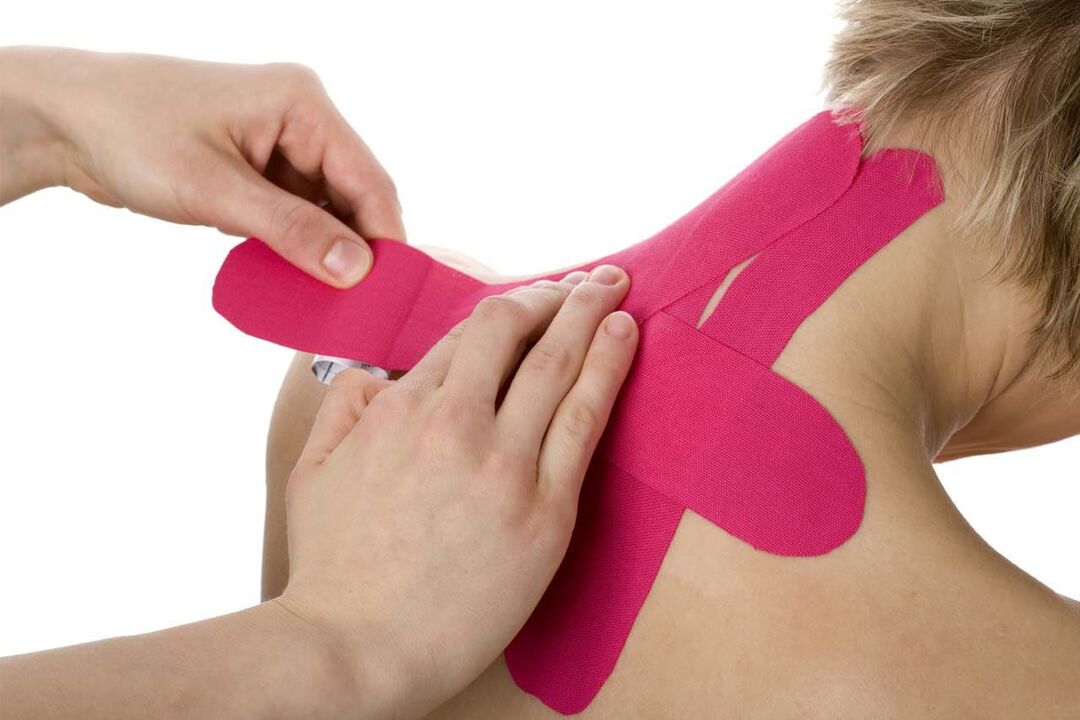
Taping is also used to treat cervical osteochondrosis.This method uses a special elastic cotton or synthetic self-adhesive tape that has a high degree of strength and elasticity.Taping helps relax muscles, relieve tension and pain.
The effect of treating a disease with kinesio tape is not achieved immediately.The first relief comes a quarter of an hour after the procedure, the full effect is achieved after a few days.You can wear kinesio tapes for osteochondrosis for up to 5 days, during which time you can do water procedures without fearing for its safety, because the tape holds tightly, dries quickly and has a "breathing" effect.
Kinesio taping is not the main method of treatment of osteochondrosis;its most effective application is in combination with other types of therapy.
Non-drug methods
Non-traditional methods are also widely used to treat the disease "osteochondrosis of the cervical vertebrae".Basically, this is a massage - a mechanical impact of varying intensity on a painful area of the body with hands.Massage improves tissue circulation and relaxes tense muscles.Thai massage is also good for treating the spine.The main thing is to be confident in the high professionalism of the massage therapist.
Reflexology is an impact on the active points of the human body with the help of needles.This procedure activates vitality and, if done correctly, can instantly relieve pain.
Treatment of the disease with folk remedies can also be useful - of course, after consultation with the attending physician.
Traction is used to restore the normal anatomical position of the spine.
Sufferers of cervical osteochondrosis should remember that the best treatment will not help if the patient himself does not make efforts.You need to change your lifestyle - move more, do therapeutic gymnastics recommended by your doctor in the morning, eat healthy and varied.Fresh air, giving up bad habits, eliminating nervous stress - all this contributes to quick recovery.